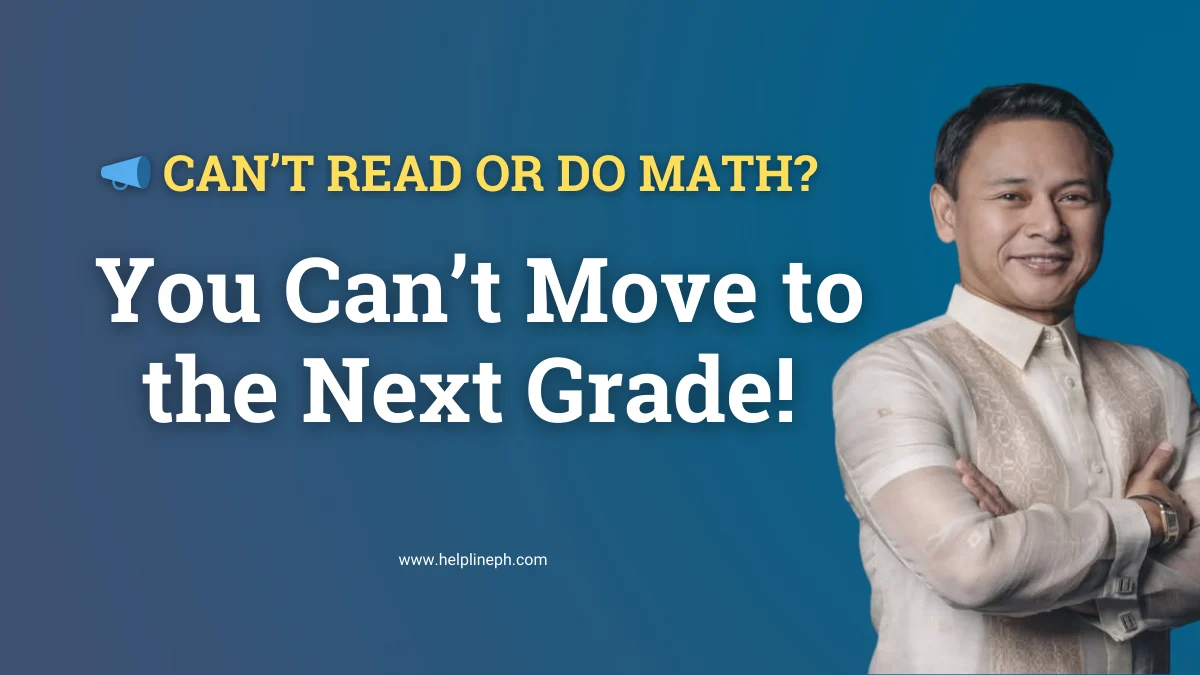
Students who can’t read or do basic math may not be allowed to move to the next grade level. This is part of a new proposal from a 10-year education plan made by a congressional commission in the Philippines. The plan is meant to fix the growing learning crisis in schools.
What the Plan Says
According to the commission, many students are moving up in school without learning the basic skills they need.
The new rule says students must:
- Know how to read and understand basic text
- Solve simple math problems
If a student cannot do these, they may stay in the same grade until they improve. The goal is to make sure every student has a strong foundation before moving on.
The Problem in Schools
Right now, many students:
- Can’t read fluently, even in Grade 6
- Struggle with adding, subtracting, multiplying
- Pass subjects by memorizing or depending on oral recitation
- Spend more time on phones and games than studying
This learning gap grows each year and affects a student’s future.
Teachers Can’t Do It Alone
Teachers are doing their best, but they can’t do everything. They:
- Make lesson plans
- Check student work
- Guide large classes
But if students go home and don’t study, learning stops.
Parents must help. Even if some parents can’t read or do math well, their support still matters. Checking notebooks, limiting screen time, and encouraging their children can make a big difference.
What Happens to Students?
If the rule becomes law:
- Students who cannot read or solve basic math may need to repeat their grade
- Teachers will give more help to struggling students
- Students will have to show real learning, not just pass through grades
This rule isn’t about punishment. It’s about making sure students are truly ready.
What Schools Must Do
Schools will need to:
- Test students on reading and math regularly
- Give special lessons or remediation to students falling behind
- Provide teachers with training and learning materials
This change means more effort — but also better results.
What People Are Saying
Many citizens shared their honest thoughts online. Here are real opinions:
“Teachers are doing their part, but parents should help too.”
“Stop K-12, replace it with a TESDA course after Grade 10 to give students real skills.”
“Why can kids understand online games but not what they read?”
“Some students graduate but still can’t read — that’s unfair!”
“Classes are too short, and some teachers just send links. How can students learn?”
Others say this rule might push students to study harder, instead of just guessing or relying on others.
Suggestions from the Public
Citizens also offered solutions:
- Replace SHS (Senior High School) with skills-based programs
- Train teachers to teach reading and math more effectively
- Limit gadget use at home
- Give students daily reading and math practice
- Require real passing grades, not just attendance or oral answers
What Can We Do?
To fix the problem:
- Students must take learning seriously.
- Parents must guide and support their children.
- Teachers need help and better resources.
- The government must support schools with clear rules and funding.
Everyone has a role in helping the students succeed.
Frequently Asked Questions (FAQs)
Will all students be forced to repeat?
No. Only students who can’t read or do math after support might repeat the grade.
Can parents who don’t know how to read still help?
Yes. Parents can guide children by setting a study routine and showing support.
Is K–12 being removed?
Some citizens are calling for its removal or change, but it’s not yet part of the law.
Why focus only on reading and math?
Because they are the core skills needed for all subjects and real-life tasks
What will schools do to help?
Schools may create extra programs, provide teacher training, and monitor student skills more often.
If students can’t read or do basic math, they should not move up just to complete a grade level. It’s not about failing them — it’s about preparing them.
This plan aims to give students a real chance at learning. After all, passing without understanding helps no one. It’s time to focus on real education — and that starts with reading and math.