Teachers Ethics Code Philippines in the Spotlight
Teachers ethics code Philippines is now a hot topic after some educators shared public support for Vice President Sara Duterte’s 2028 presidential campaign. When I first read about this issue, I asked myself: Should teachers openly support political candidates online? It is a fair question. After all, teachers are also citizens with the right to vote.
But teachers also have rules to follow. They are guided by a professional code that protects their dignity, fairness, and trust in the classroom. This issue became more serious when social media users noticed teachers posting messages in favor of Duterte’s presidential bid.
Let us look at what happened, what the law says, and why the Teachers ethics code Philippines matters now more than ever.
Who Is Vice President Sara Duterte?
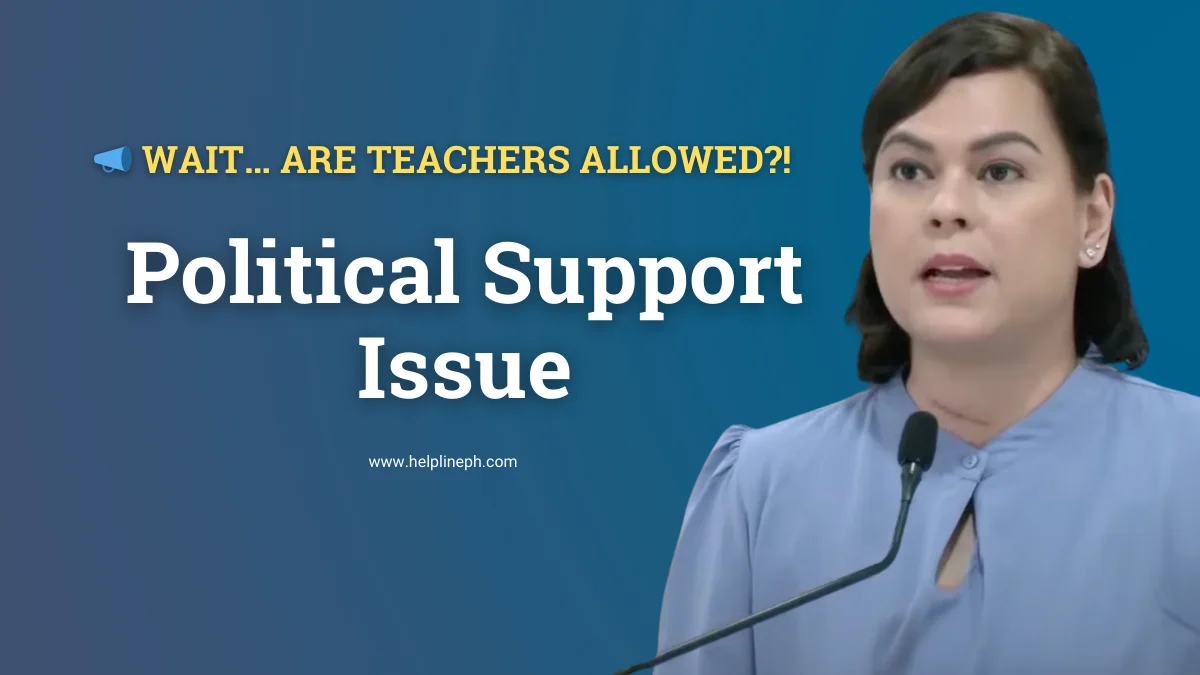
Sara Duterte is currently the Vice President of the Philippines. She is also the daughter of former President Rodrigo Duterte.
In February 2026, she announced her plan to run for president in the 2028 national elections. According to reports, she said that the strong support from her followers and her dissatisfaction with the current administration influenced her decision.
Her announcement came at a sensitive time. She is facing impeachment complaints related to the alleged misuse of confidential funds. Meanwhile, her father is dealing with pre-trial proceedings at the International Criminal Court.
Because of these events, her presidential bid quickly became a topic of national discussion.
Why Teachers Were Called Out Online
After her announcement, some teachers posted messages online showing support for her campaign. These posts appeared on platforms like TikTok, X (formerly Twitter), and Reddit.
Some users gathered screenshots of teachers expressing excitement about her 2028 run. One online user even pointed out that some of those posting were Department of Education (DepEd) teachers.
A Reddit user who claimed to be preparing for the Licensure Examination for Teachers (LET) stated that teachers should remain non-partisan. According to this user, public support for a candidate could be a violation of the Code of Ethics.
This is where the Teachers ethics code Philippines becomes very important.
What Is the Code of Ethics for Professional Teachers?
The Code of Ethics for Professional Teachers outlines the conduct expected from licensed educators in the Philippines. It presents teachers as professionals with dignity, high moral values, and strong competence.
As someone who has worked closely with educators in community projects, I have always seen how much society trusts teachers. Parents trust them with their children’s growth. Students look up to them as role models. Because of that trust, teachers are held to high standards.
Key Provisions Related to Politics
Here are two important sections of the Code:
Article III, Section 5
A teacher shall not engage in the promotion of any political, religious, or partisan interest. They must not collect or receive money or services for such purposes.
Article III, Section 8
A teacher shall not use their position or influence to pressure others to follow any political choice.
These sections clearly state that teachers must not promote political interests, whether directly or indirectly.
Why Political Neutrality Matters in Schools
When I was in high school, I noticed how powerful a teacher’s opinion could be. If a teacher strongly praised or criticized a public figure, many students listened carefully. Some even copied that view.
Teachers have influence. That influence can shape young minds. This is why the Teachers ethics code Philippines requires political neutrality.
Here are some reasons why neutrality matters:
1. Protecting Students from Bias
Students come from different families with different political beliefs. If a teacher openly supports one candidate, students who disagree may feel uncomfortable or pressured.
2. Maintaining Professional Integrity
Teachers are licensed professionals. Their credibility depends on fairness and objectivity.
3. Avoiding Abuse of Authority
Even a simple post can be seen as using professional identity to support a candidate. If a teacher’s profile shows their school or position, the public may connect that support to the institution.
Freedom of Expression vs. Professional Duty
This issue often leads to one big question: Do teachers lose their right to free speech?
The answer is not simple.
Teachers, like all citizens, have the right to vote and hold personal opinions. However, when they publicly promote a political campaign, they may cross into partisan activity. The Teachers ethics code Philippines does not remove their rights, but it limits how they express political support in a professional capacity.
Think about other professions. Judges, military officers, and some government workers also face limits when it comes to political involvement. These limits protect public trust.
Possible Consequences of Violating the Code
The Code of Ethics clearly states that violations may lead to disciplinary action.
These may include:
- Revocation of teaching license
- Suspension from the profession
- Reprimand
- Cancellation of temporary or special permit
These are serious penalties. Losing a license means losing the ability to teach legally.
I once met a teacher who worked for years to pass the LET. She studied late at night while working part-time. That license meant everything to her. Risking it for political posts is not a small matter.
The Role of Social Media in the Issue
Social media makes everything public and permanent. In the past, political opinions were shared in private conversations. Today, one post can reach thousands of people.
Many teachers may not realize that even a simple “excited” message about a candidate can be interpreted as campaign support.
This is why awareness of the Teachers ethics code Philippines is very important in the digital age.
Public Reaction and Online Debate
The public reaction has been mixed.
Some people argue that teachers are citizens first and should not be silenced. Others believe teachers must strictly follow professional rules to protect students.
This debate shows how divided public opinion can be during election seasons.
Long-Term Impact on the Education System
If teachers openly support political candidates, trust in the education system may weaken. Parents may question whether lessons are neutral. Students may doubt fairness in discussions about government and history.
Over time, this could damage the image of the teaching profession.
That is why long-term thinking is important. Protecting the integrity of education is more important than short-term political excitement.
What Teachers Can Do Instead
Teachers who care about national issues can still participate in healthy ways:
- Vote privately.
- Join non-partisan voter education drives.
- Teach students critical thinking skills.
- Encourage respectful political discussions without promoting a candidate.
In my view, teaching students how to think is more powerful than telling them what to think.
The Importance of Professional Responsibility
The Teachers ethics code Philippines exists to protect both educators and students. It reminds teachers that their actions, even outside school hours, may affect public trust.
Being a teacher is not just a job. It is a public responsibility.
Professional responsibility includes:
- Acting with integrity
- Avoiding conflicts of interest
- Protecting student welfare
- Following legal guidelines
These standards help maintain the dignity of the profession.
A Personal Reflection
I still remember one of my favorite teachers. He never told us who to vote for. Instead, he taught us how to examine facts, question sources, and listen to different views. Years later, I realized how valuable that lesson was.
That experience shaped how I see this issue today. Teachers influence the next generation. With that influence comes responsibility.
Frequently Asked Questions (FAQs)
Can teachers vote in elections?
Yes. Teachers have the right to vote as private citizens.
Are teachers allowed to express political opinions online?
They may have personal opinions, but public promotion of political campaigns may violate the Teachers ethics code Philippines.
What happens if a teacher violates the Code of Ethics?
Possible penalties include suspension, reprimand, or revocation of their teaching license.
Why does the Code restrict political promotion?
The rule protects neutrality, fairness, and public trust in schools.
Does the Code apply to social media posts?
Yes. Online posts can be considered public promotion if they show support for a political campaign.
The Teachers ethics code Philippines serves as a serious reminder for all educators. Political seasons often bring strong emotions. Supporters may feel proud and excited. Critics may feel concerned or angry.
But teachers must think carefully before posting political content.
Education shapes the future of the nation. When teachers remain fair and professional, students benefit. Public trust stays strong. The profession keeps its dignity.
As we move closer to the 2028 elections, the focus should not only be on political campaigns but also on maintaining ethical standards in education.
Teachers have a powerful role. With that power comes responsibility.